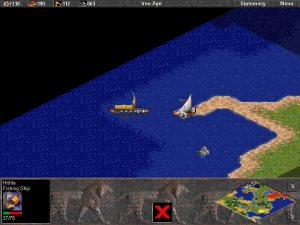
About the game
Age of Empires took the real-time strategy template Warcraft and Command & Conquer had popularised and gave it ten thousand years of homework. Twelve civilisations — from Egypt and Babylon to the Yamato — advance through four ages, each transition unlocking deeper technology while your villagers hunt gazelle, farm, fish and haul stone. The genius was making economy the star: military power grows out of foraging decisions made twenty minutes earlier.
Where its rivals embraced pulp fiction, Age of Empires courted the classroom. Campaigns walk through the actual rise of Egypt, Greece and the Hittites; wonders of the world stand as win conditions; even the manual read like an illustrated history primer. That texture — and the sprawling random-map mode — gave every skirmish the flavour of an alternate ancient history.
Built by Ensemble Studios and published by Microsoft, it turned into one of the defining PC franchises of all time. The formula sharpened here (ages, villagers, wonders, civilisation bonuses) would reach its apex in Age of Empires II, but the original's blend of strategy and antiquity is where the dynasty was founded.
Why it matters
Age of Empires married RTS mechanics to real history and economy-first design, founding one of the genre's great franchises and proving "educational" and "competitive" could coexist.
Technical notes
2D sprite engine over random-map generation, with eight-player LAN and internet play through the era's matchmaking services. Documented here in its original 1997 PC release.
Files & downloads
VG90 is a reference and discovery archive. We do not host game files; download buttons lead to the external source listed for the entry.
Download// Keep exploring
Similar Games
 1997
1997
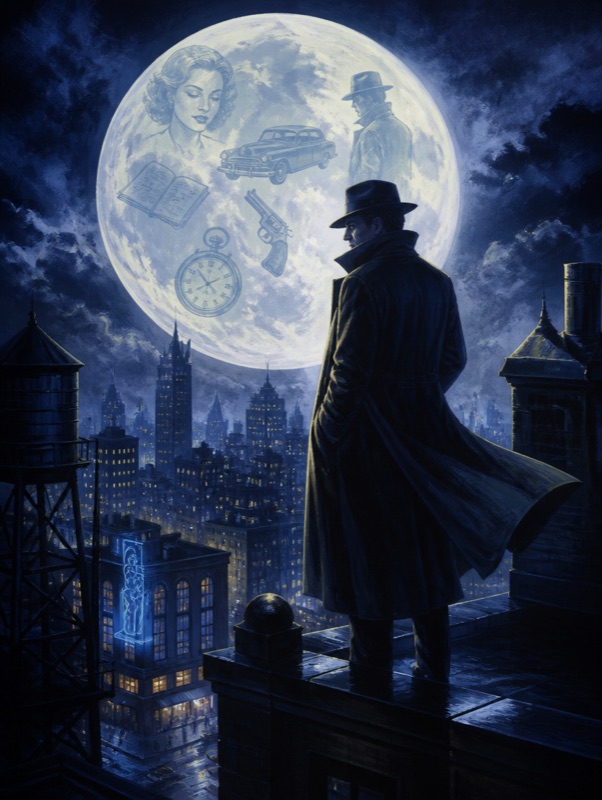
Moonlight Detective
DiscRunner CD
A jazz-scored rooftop noir on CD: interview the city between midnight and dawn, and watch…
View details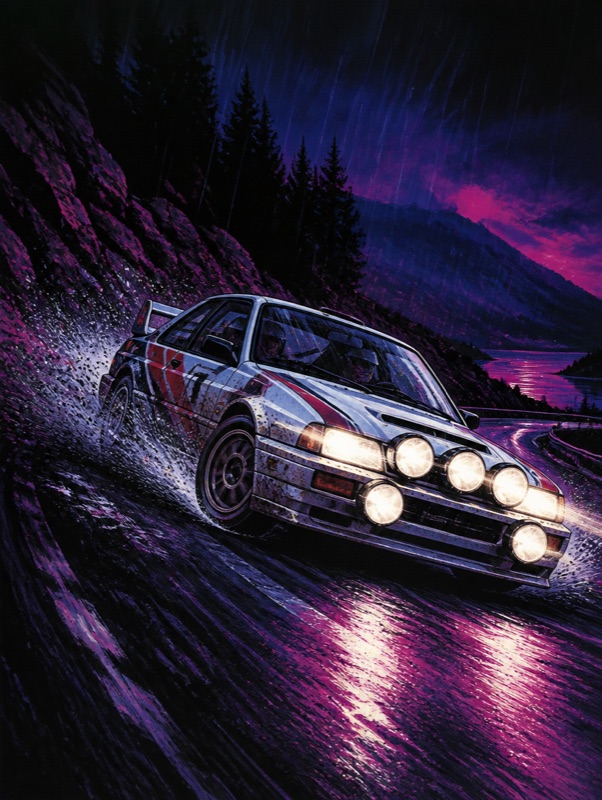 1997
1997
Turbo Rally Night
DiscRunner CD
Night-only rally racing on CD: co-driver voice calls, headlight physics and stages that…
View details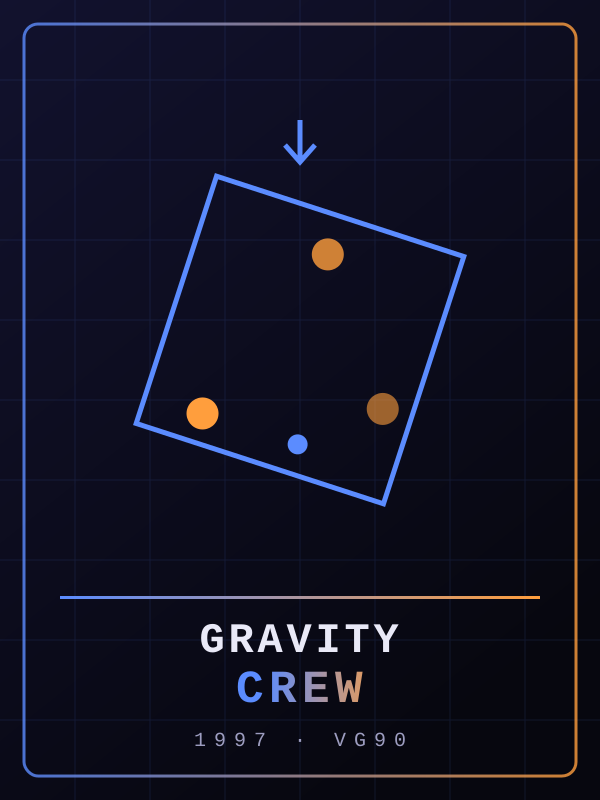 1997
1997
Gravity Crew
Vectra 32
A puzzle-platformer aboard a derelict station where "down" is a tool: rotate gravity per…
View details 1997
1997
Darklight Conflict
DOS SEGA Saturn
VG90 catalogues Darklight Conflict (1997), a release from the leap into 3D for DOS, SEGA…
View details