About the game
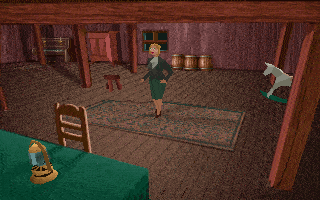
Alone in the Dark invented a way of being scared. Investigating the suicide of a painter in Derceto, a decrepit Louisiana mansion, you play detective Edward Carnby or heiress Emily Hartwood — polygonal figures moving through pre-rendered rooms watched by fixed, deliberately unhelpful camera angles. The house reveals itself in framed compositions: a landing seen from above, a corridor from its darkest corner, dread built directly into cinematography.
The Lovecraft-steeped scenario plays by survival rules a full four years before the term existed: ammunition is scarce, many horrors are better blocked, tricked or simply fled than fought, and the library's books contain both vital lore and lethal traps for careless readers. The mansion itself is the antagonist — sealing its windows, learning its history, and finally descending into the caverns beneath it structure the whole nightmare.
Frédérick Raynal's team at Infogrames shipped it on DOS in 1992 (the archive also lists Mac, 3DO, FM Towns and more), and its fixed-camera 3D grammar was adopted wholesale by the console horror giants that followed. Every haunted mansion in gaming since owes Derceto rent.
Why it matters
The founding text of survival horror: fixed-camera 3D dread, scarce resources and an architectural antagonist, all years before the genre had a name. Its influence on later horror franchises is total.
Technical notes
Flat-shaded polygonal characters composited over hand-painted fixed-perspective backgrounds — a hybrid that defined horror presentation for a decade. Documented across DOS, Mac, 3DO, FM Towns, PC-98 and Acorn releases.
Files & downloads
VG90 is a reference and discovery archive. We do not host game files; download buttons lead to the external source listed for the entry.
Download// Keep exploring
Similar Games
 1992
1992
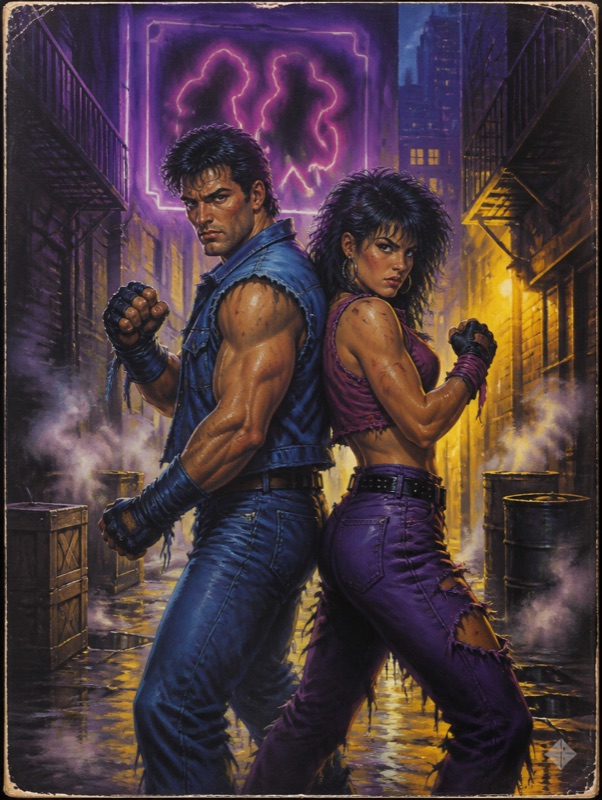
Phantom Alley
ArcadeWorks
Co-op beat 'em up down one endless rain-soaked alley: crate weapons, back-to-back…
View details 1992
1992
Dungeon of the Comet
Bitmaster 8
An 8-bit roguelike-flavoured RPG on a deadline: the comet returns in 49 days, and every…
View details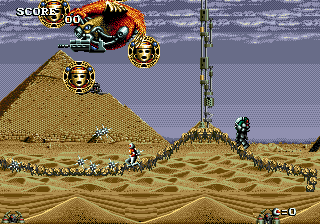 1992
1992
Chelnov: Atomic Runner
Arcade Genesis Sharp X68000
Chelnov: Atomic Runner (1992) is a title from the 16-bit golden age, catalogued in the…
View details 1992
1992
Putt-Putt Joins the Parade
Mac DOS 3DO
Putt-Putt Joins the Parade (1992) is a title from the 16-bit golden age, catalogued in…
View details