About the game
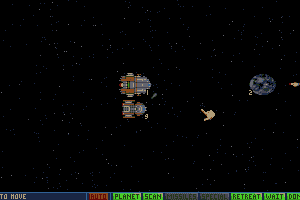
Master of Orion took Civilization's one-more-turn pull into deep space and refined it into the genre's most elegant machine. Ten spacefaring races — telepathic Psilons, industrious Klackons, repulsive-but-honest Bulrathi — expand from single homeworlds across a procedurally scattered galaxy, colonising hostile biomes, teching through six research fields and colliding in fleet battles resolved on a tactical grid.
Its systems favour meaningful sliders over micromanagement: each colony splits effort between ships, defence, industry, ecology and research with a drag of the mouse, so a fifty-planet empire stays playable. Ship design is the connoisseur's layer — hull sizes, beam weapons, shields and specials assembled into doctrines, with old designs obsoleted as the tech wave rolls forward. Diplomacy, espionage and the Galactic Council vote give even peaceful games a knife-edge endgame.
Coined as the term's origin — "4X" was first used to describe it — Master of Orion remains the reference point for space strategy, and its 1996 sequel only deepened the dynasty.
Why it matters
The game the term "4X" was invented for: Master of Orion set the standard for race asymmetry, ship design and playable-scale empire management that space strategy still chases.
Technical notes
VGA presentation over slider-driven colony simulation and grid-based tactical fleet combat; galaxy size and race count configurable per game. Documented here in its DOS release.
Files & downloads
VG90 is a reference and discovery archive. We do not host game files; download buttons lead to the external source listed for the entry.
Download// Keep exploring
Similar Games
 1993
1993
Jungle Byte Adventure
Nova 16
The 16-bit platformer with the era's best vine physics: momentum swings, secret ruins and…
View details 1993
1993
Vector Storm
ArcadeWorks
Pure-vector arena survival: one ship, luminous geometry, and a risk-loop where your…
View details 1993
1993
Big Blue Disk #80
DOS
Released in 1993, Big Blue Disk #80 is indexed by VG90 as part of the 16-bit golden age…
View details 1993
1993
Dragon's Lair
Mac DOS Arcade
Dragon's Lair (1993) is a title from the 16-bit golden age, catalogued in the VG90…
View details