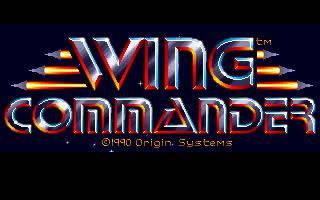
About the game
Wing Commander cast the player not as a ship but as a person: a rookie pilot on the carrier TCS Tiger's Claw, flying sortie after sortie in humanity's war against the feline Kilrathi Empire. Between missions you walk the barracks, talk to wingmen with names, egos and survival odds, and watch the funeral scenes when your choices get them killed. In 1990, that continuity of character and consequence felt like science fiction itself.
The dogfighting still holds its own logic: afterburner management, missile locks, and wingman orders barked over the radio while Kilrathi aces taunt you by name. Chris Roberts' masterstroke was the branching campaign — win or lose key missions and the war itself shifts course, sending the Tiger's Claw down victory or retreat paths with different missions, systems and endings. Failure isn't a game over; it's a worse war.
Its bitmap-scaled 3D pushed 1990 PCs to their limits and famously sold sound cards and 386s on its own. The franchise it launched — sequels, film-quality FMV epics, a certain space-sim renaissance decades later — starts in this cockpit.
Why it matters
Wing Commander proved PC games could be cinematic blockbusters — branching war campaigns, characterised wingmen and production values that repositioned the whole platform.
Technical notes
Scaled-bitmap 3D cockpit engine with a mission-tree campaign structure; a hardware benchmark of its day. The archive documents DOS, Amiga and FM Towns releases.
Files & downloads
VG90 is a reference and discovery archive. We do not host game files; download buttons lead to the external source listed for the entry.
Download// Keep exploring
Similar Games
 1990
1990
Crystal Quest 90
Bitmaster 8
A luminous 8-bit puzzler: rotate crystal chains inside amethyst caverns, chase resonance…
View details 1990
1990
European Soccer Challenge
Amiga C64 Amstrad CPC
Released in 1990, European Soccer Challenge is indexed by VG90 as part of the 16-bit…
View details 1990
1990
Flowing Waters
DOS
VG90 catalogues Flowing Waters (1990), a release from the 16-bit golden age for DOS, for…
View details 1990
1990
Moonbase
Mac DOS Amiga
Released in 1990, Moonbase is indexed by VG90 as part of the 16-bit golden age for Amiga,…
View details