// Archive entry № 36551
Wolfenstein 3D
id Software's 1992 shareware breakout: escaping Castle Wolfenstein at full speed, one secret push-wall at a time — the proof-of-concept for the FPS genre.
- Players
- Region
- Worldwide
Rate this game
About the game
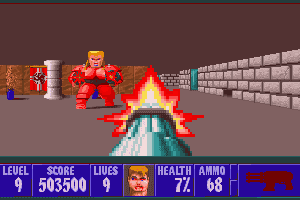
Wolfenstein 3D is where the first-person shooter found its shape. As B.J. Blazkowicz, an Allied prisoner shooting his way out of a Nazi castle, you move through maze-like floors at a pace no 3D game had managed before on ordinary PCs — a flat-out sprint through guards, dogs and secret rooms hidden behind push-walls, hunting for the elevator on every floor.
Its structure was pure Apogee-era shareware: the first episode given away freely, five more sold by mail order. That funnel worked spectacularly, and it built the audience — and the engine confidence — that id Software would spend eighteen months later on Doom. The episodes escalate from prison break to plots against secret weapon programmes, capped by boss encounters that leaned into pulp-comic villainy.
Played today, its grid-based levels feel austere: every wall the same height, every floor flat. But that austerity is exactly what made 1992 hardware sing, and the loop it established — key hunting, secret walls, score, speed — carried directly into everything id built next and everything the industry copied afterwards.
Why it matters
This is the genre's proof of concept: fast first-person action was possible on a home PC, and shareware could carry it to millions. Doom refined the formula, but Wolfenstein 3D established it.
Technical notes
A ray-casting engine drew a strict grid of equal-height walls with no floor or ceiling texturing — brutal constraints that bought a then-unheard-of frame rate on 286/386 machines. The archive also lists an Acorn 32-bit release.
Files & downloads
VG90 is a reference and discovery archive. We do not host game files; download buttons lead to the external source listed for the entry.
Download// Keep exploring
Similar Games
 1992
1992
Phantom Alley
ArcadeWorks
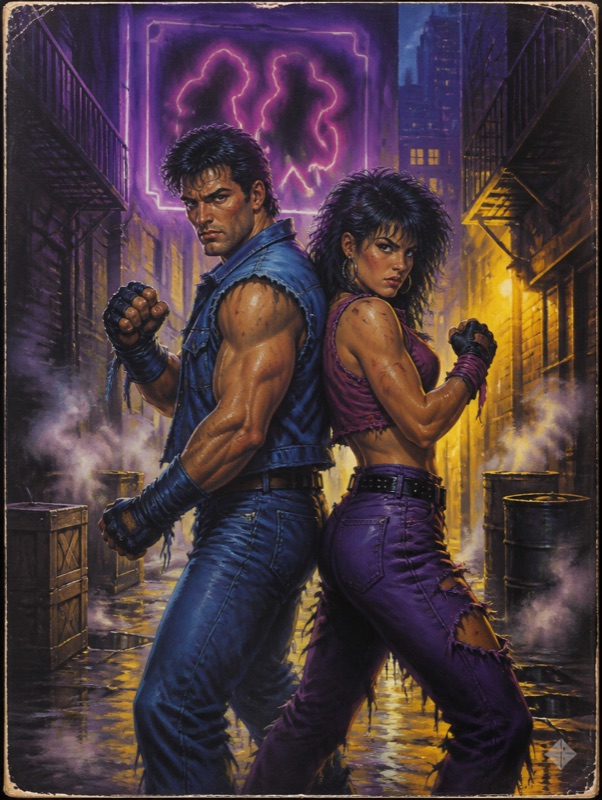
Co-op beat 'em up down one endless rain-soaked alley: crate weapons, back-to-back…
View details 1992
1992
Dungeon of the Comet
Bitmaster 8
An 8-bit roguelike-flavoured RPG on a deadline: the comet returns in 49 days, and every…
View details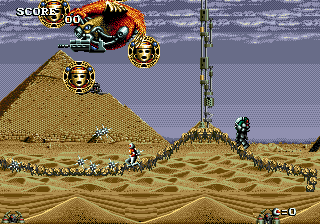 1992
1992
Chelnov: Atomic Runner
Arcade Genesis Sharp X68000
Chelnov: Atomic Runner (1992) is a title from the 16-bit golden age, catalogued in the…
View details 1992
1992
Putt-Putt Joins the Parade
Mac DOS 3DO
Putt-Putt Joins the Parade (1992) is a title from the 16-bit golden age, catalogued in…
View details