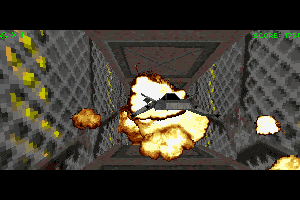
About the game
Descent took the first-person shooter off its feet. Piloting a small fighter through infested mining tunnels on Earth's moon and beyond, you move with six full degrees of freedom — pitch, yaw, roll and strafing in any direction — through corridors that corkscrew, fold back on themselves and open into vast reactor chambers. "Up" stops meaning anything about thirty seconds in, and the game builds its identity on that disorientation.
Each mission is a sabotage run: fight through robot defenders, blow the reactor, then race the shockwave back out through passages you half-remember, guided by a wireframe automap that becomes a survival tool rather than a convenience. Rescuing hostages and rationing shield and energy pickups give the loop its texture, while hulking boss robots guard the deepest levels.
Descent shipped with fully polygonal enemies and environments when most shooters were still faking depth, and its multiplayer — cooperative and anarchic deathmatch alike — earned a devoted long-tail community. It remains the benchmark everyone reaches for when describing full-freedom movement done right.
Why it matters
Descent delivered genuine six-degrees-of-freedom 3D combat before Quake made polygons standard — a control scheme so distinctive it became its own subgenre, still cited by every zero-g shooter since.
Technical notes
True polygonal engine with portal-connected tunnel geometry — no fixed floor plane, robots as articulated 3D models. Documented here in its DOS and Mac releases; joystick strongly recommended, motion sickness optional.
Files & downloads
VG90 is a reference and discovery archive. We do not host game files; download buttons lead to the external source listed for the entry.
Download// Keep exploring
Similar Games
 1995
1995
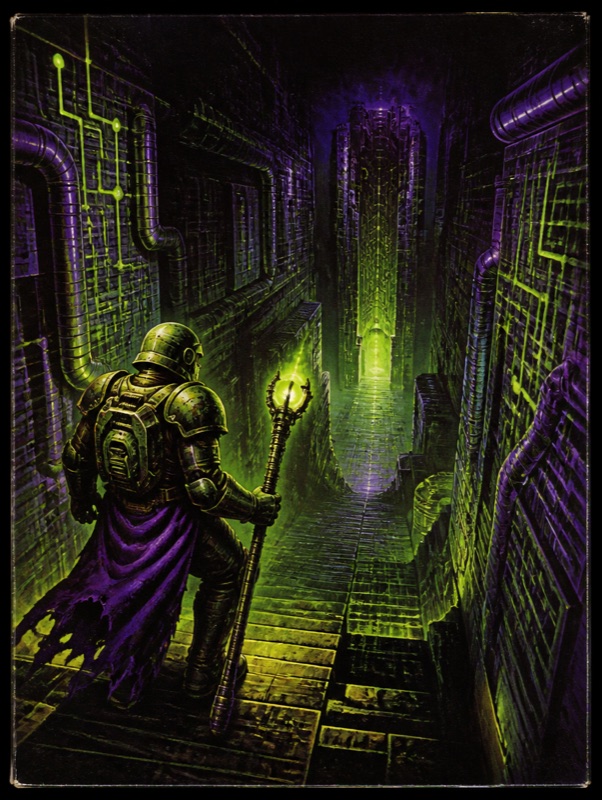
Cyber Dungeon DX
Vectra 32
A first-person dungeon crawler where the dungeon is a mainframe: hack doors, splice…
View details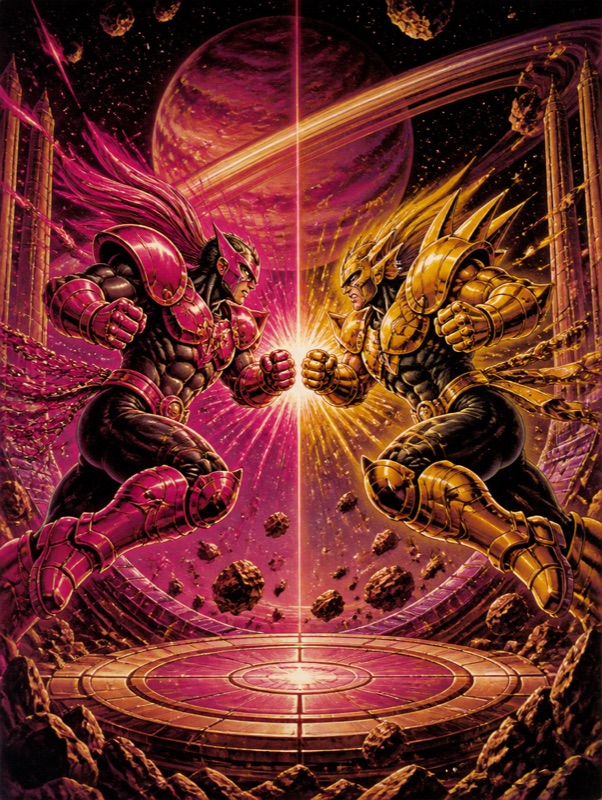 1995
1995
Astro Fist Arena
Vectra 32 ArcadeWorks
Zero-G arcade fighting above a ringed planet: eight orbital gladiators, wall-bounce…
View details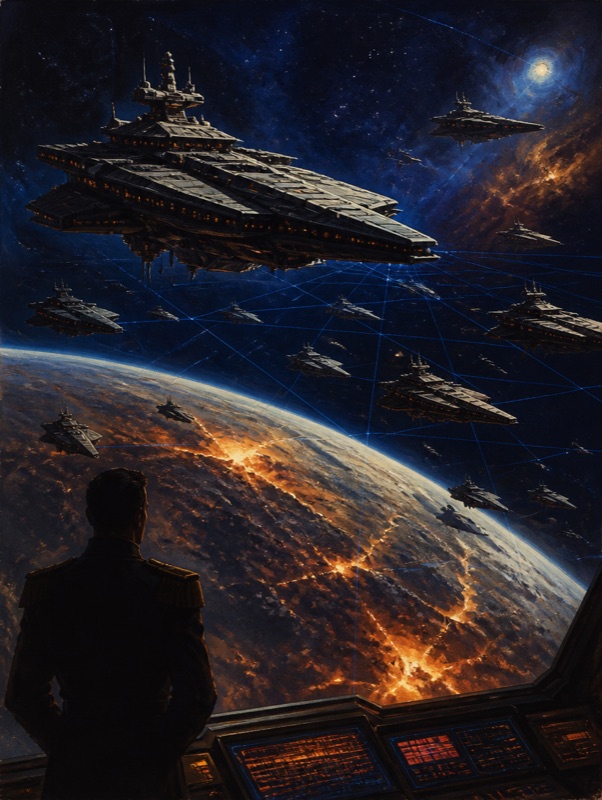 1995
1995
Starfall Tactics 95
Home Computer (DOS)
Turn-based fleet tactics above dying worlds: facing matters, wrecks become cover, and…
View details 1995
1995
Sky Merchant
Home Computer (DOS)
Trade among floating islands with a hand-drawn ledger: winds are your roads, storms your…
View details