90s racing games covered a huge range of design. Some chased instant arcade speed with bright tracks and forgiving handling. Others leaned into simulation, asking players to understand braking, traction, tuning and the personality of a circuit. The genre was never one thing.
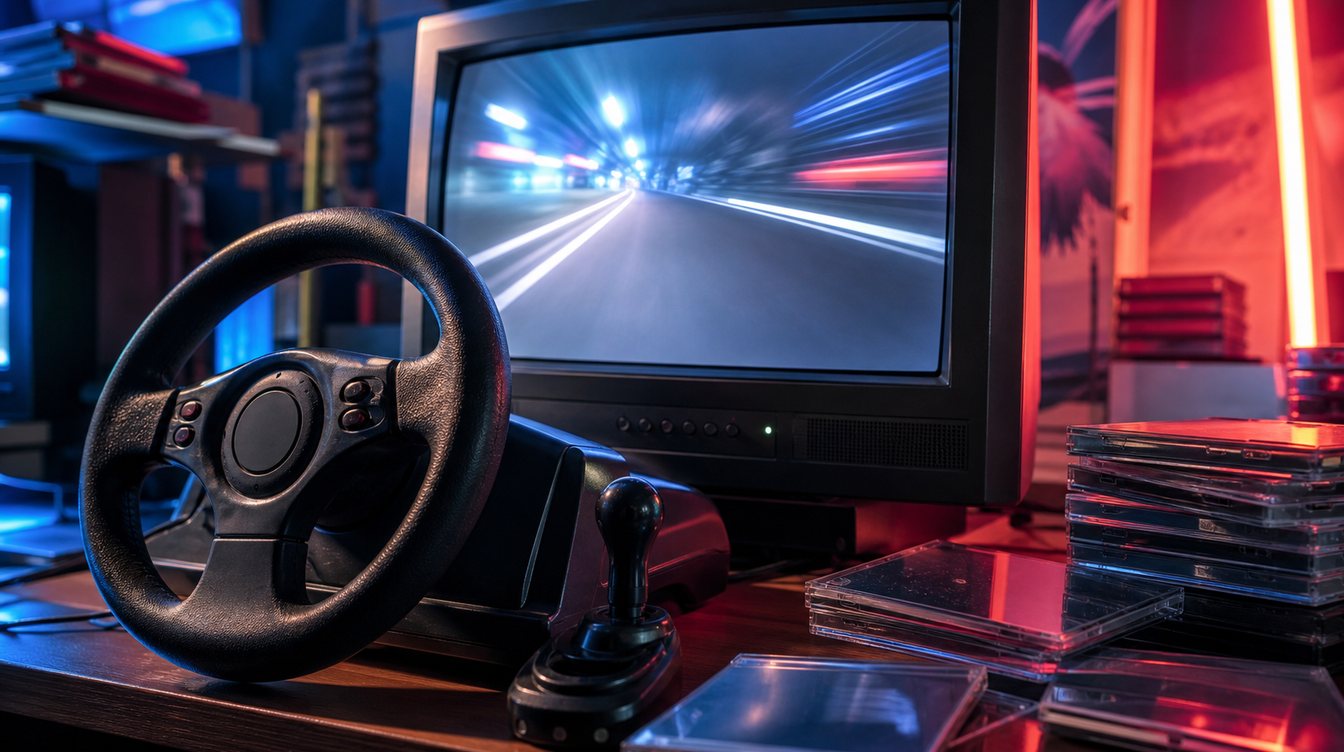
Hardware changed the feel. A keyboard made racing digital and precise in a strange way. A joystick softened the input. A racing wheel turned the game into a physical setup. On PC, the controller could shape the entire memory of a game.
Graphics hardware mattered as well. Texture filtering, draw distance, frame rate and cockpit detail all influenced how fast a game felt. Late-90s 3D racing titles became showcases for graphics cards because speed made technical improvements obvious.
Arcade racing and simulation also had different goals. Arcade games wanted flow, spectacle and quick restarts. Simulations wanted mastery, repeatable physics and believable consequences. The best archives should tag and describe those differences instead of treating every racing title as interchangeable.
Search behavior proves the point. Players look for "old PC racing game", "90s arcade racer", "DOS racing sim" or "Windows 98 racing wheel game". Those phrases mix memory, platform and control style. Metadata can connect them to the right titles.
VG90 documents racing games as design experiences, not only as lists of vehicles and tracks. The important question is how the game asked the player to control speed.