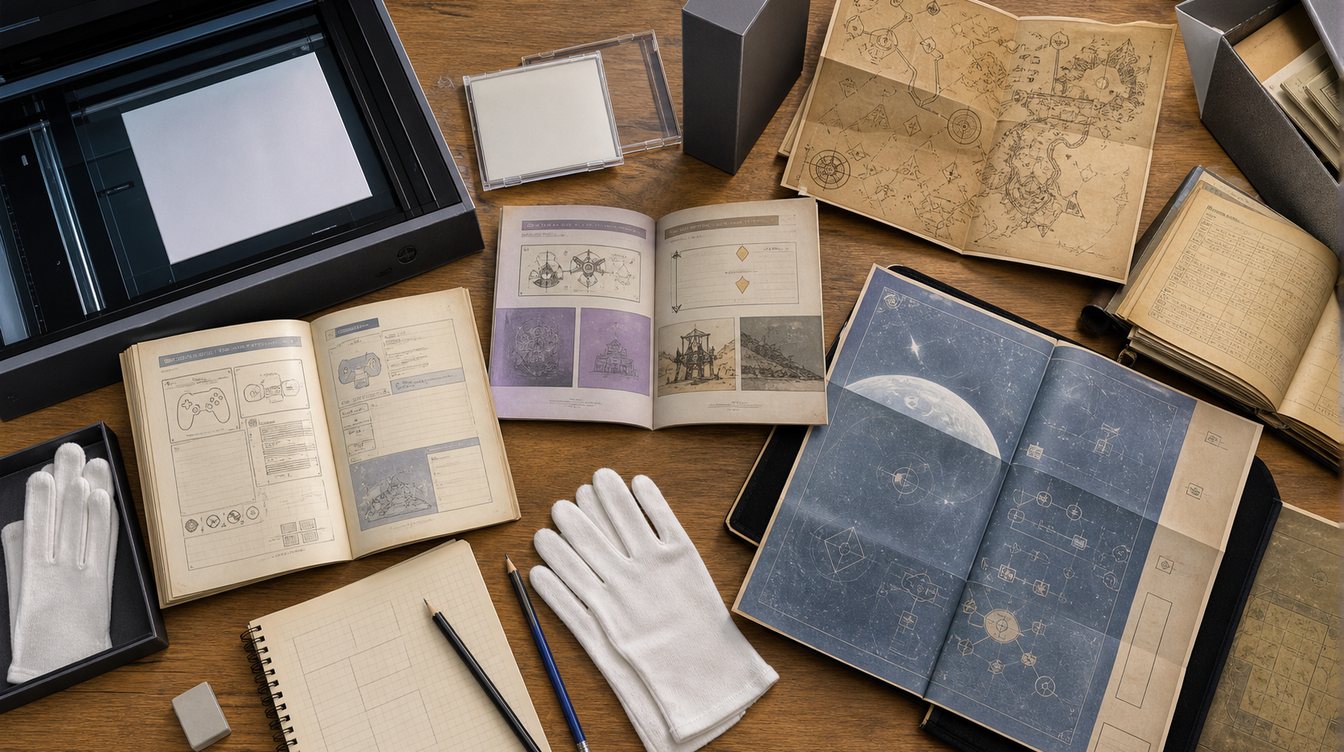
Game manuals and maps are easy to overlook until they are missing. Many retro games expected players to read, study and reference printed material. Controls, installation steps, world lore and even copy protection could live outside the executable.
Manuals helped games feel larger than their disks. A role-playing game manual could explain rules and history. A simulation manual could teach procedures. A strategy reference card could turn a complex interface into something learnable.
Maps were often part of play. They guided exploration, invited annotation and gave players a physical relationship with imaginary spaces. In some games, drawing or reading a map was not extra material; it was the intended experience.
Hint books and reference sheets also reveal how players interacted with difficulty. Before instant web searches, help had a format, a cost and a pace. That changed how people solved puzzles and shared knowledge.
Preservation should connect documentation to game entries whenever possible. A file without its manual may run, but it can lose meaning. Archive metadata should note editions, scans, language and document type where available.
VG90 treats documentation as part of game history. The best retro archive does not only remember what launched on screen. It remembers what sat beside the keyboard.