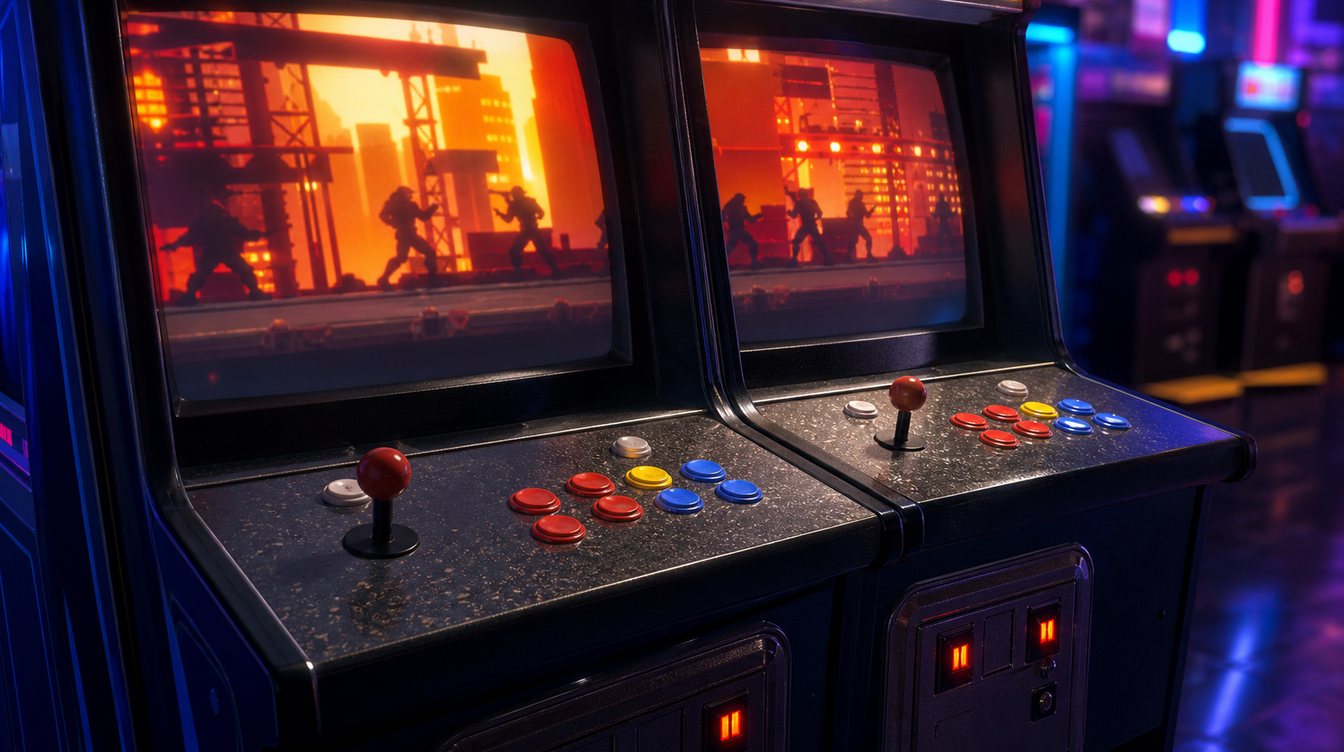
Arcade beat em up games were built for public play. Their job was to make action readable instantly from a few steps away, invite a second player, and create a steady rhythm of movement, impact and recovery. The cabinet shaped the design.
Local co-op was the heart of the genre. Two players sharing a screen created comedy, chaos and teamwork without menus or matchmaking. The best games made it obvious where to stand, who to hit and when the group was in trouble.
Short-session design made every stage count. Arcade games had to attract attention, teach quickly and escalate fast. Enemy waves, environmental hazards and boss encounters were paced to keep players engaged without long explanations.
Home conversions changed the formula. A console or PC version might add continues, difficulty settings or altered controls. Those differences matter in an archive because players may remember the cabinet, the home port or a regional version.
Search intent around beat em ups is often descriptive: "old arcade fighting game with co-op", "side scrolling beat em up", "90s arcade brawler". Strong genre tags and screenshots are essential because many titles share similar themes.
VG90 documents beat em up games as social design. The genre is not only about combat; it is about shared space, visible rules and the energy of playing shoulder to shoulder.