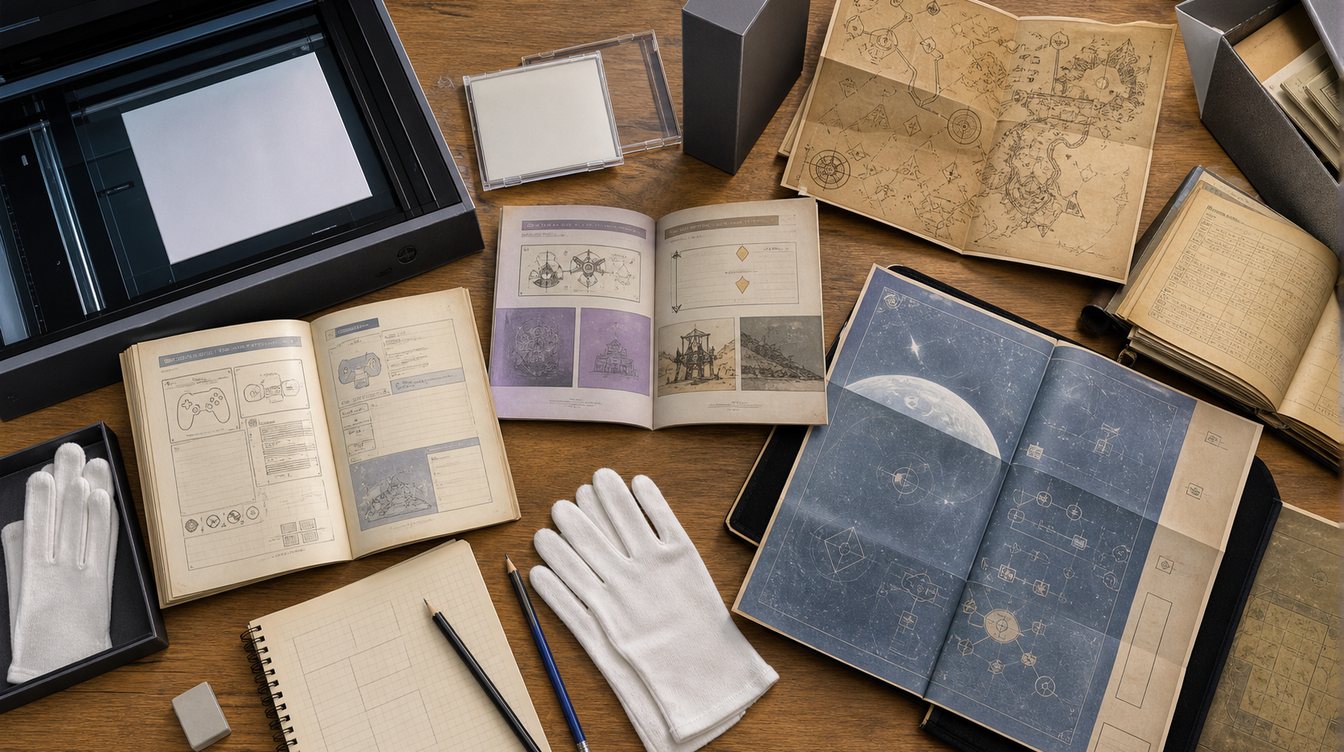
The role-playing game found its most flexible home on the 90s PC, largely because the platform could support what the genre actually needs: text, inventory management, complex rule systems and enough storage for long, branching narratives.
Party-Based Dungeon Crawling Refines Itself
Early in the decade, PC RPGs frequently centered on managing a full party of characters through turn-based or phase-based combat, deep character-building systems, and dungeons that rewarded careful mapping and resource planning. This lineage carried forward classic tabletop-inspired design into a format built specifically for a keyboard and a save file.
Choice and Consequence Become the Genre's Signature
As the decade progressed, branching dialogue and consequence-driven questing became a defining PC RPG strength — a shift covered from a historical angle in Best Retro Games of 1997, where Fallout demonstrated how far reactive storytelling could go. By the late 90s, a strong RPG was expected to remember player choices, not just track experience points.
Why PCs Suited RPGs Better Than Consoles of the Era
A keyboard supports far more simultaneous commands and menu depth than a typical console controller from this period, and PC storage formats scaled up faster, supporting bigger worlds and more recorded dialogue. That combination made deep, systems-heavy RPGs a natural fit for the platform well before consoles caught up.
Exploring the Genre Further
For genre-adjacent hybrids, see how Best Retro Games of 1996 covers Diablo's action-RPG approach, and browse the archive's genre listings to compare RPGs against strategy, adventure and simulation titles from the same decade.