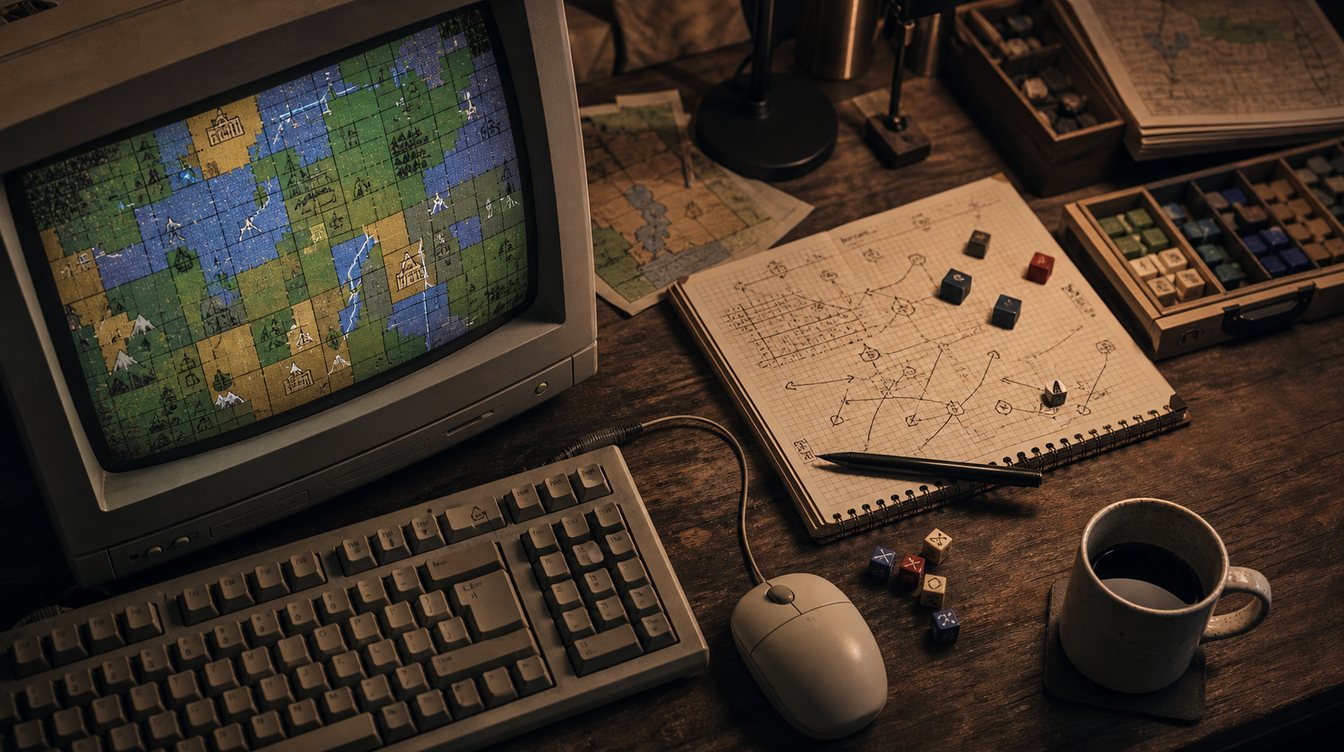
Classic strategy games are central to 90s PC history because the platform rewarded patience. A PC could handle menus, maps, hotkeys, save files and complex rules in a way that suited long sessions. Strategy games made the computer feel like a planning table.
Real-time strategy brought speed to the genre. Base building, resource gathering and unit control turned the mouse into an instrument of pressure. The appeal was not only winning battles. It was learning to think while the map kept moving.
Turn-based strategy offered a different pleasure. It let players study, compare and commit. A good turn-based game turns each choice into a small argument with the future. That style made campaigns feel personal because mistakes could unfold slowly.
4X games expanded the scale even further. Explore, expand, exploit and exterminate became a framework for empire design, diplomacy and long-term optimization. These games need strong metadata because their versions, expansions and platforms can differ substantially.
Screenshots help strategy discovery more than cover art. Interface layout, map style, unit scale and color palette can identify a game quickly. A player may remember a grid, an advisor window or a minimap before remembering the exact title.
VG90 treats strategy games as systems worth explaining. Genre tags, platform details, release years and context make it easier for players to rediscover the games that taught them to plan.