Windows 95 and Windows 98 games sit in a strange but important middle period. They are not quite DOS classics, and they are not quite modern PC games. They belong to the years when the PC stopped feeling like a machine you negotiated with and started feeling like a consumer platform built for games.
The biggest change was standardization. DOS players often fought with memory, sound card settings and boot disks. Windows did not solve every problem, but it promised a shared environment: installers, desktop shortcuts, control panels, DirectX and a growing expectation that a game should just start. That expectation shaped everything after it.
CD-ROM storage also became normal. Full-motion video, voice acting, orchestral soundtracks and huge asset libraries moved from novelty to sales pitch. Some games used that space brilliantly; others padded themselves with video and awkward interfaces. Either way, the design language of PC games changed because the storage ceiling disappeared.
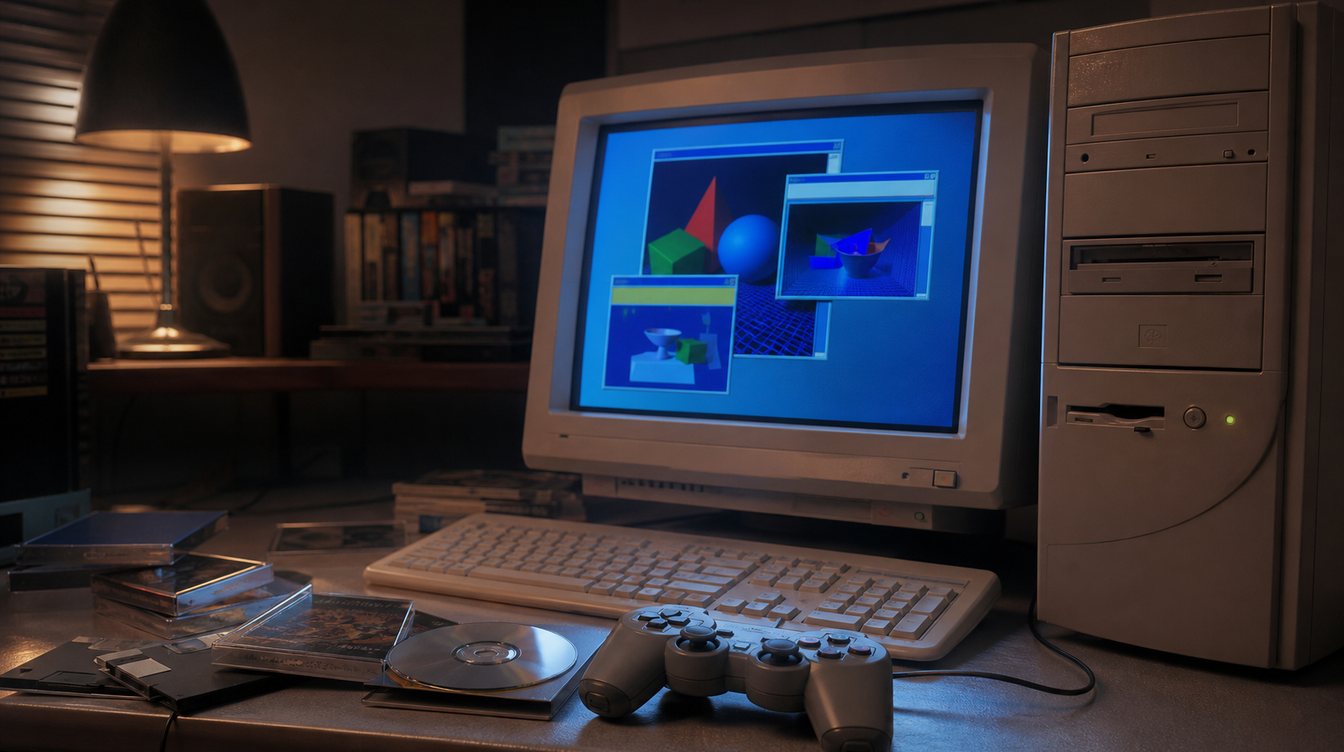
Then came 3D acceleration. The late 90s were full of boxes boasting support for specific cards, APIs and rendering modes. Players learned words like Glide, OpenGL and Direct3D because the difference could be visible immediately. A Windows 98 gaming PC was no longer just a computer. It was a stack of hardware choices that affected how a game looked and felt.
This period is vital for archives because compatibility is messy. Some titles still preferred DOS. Some needed early Windows. Some expect old codecs, old installers or 16-bit components. The historical entry for a Windows 95 or Windows 98 game should record platform details carefully, because "PC" alone is not enough.
Modern PC gaming inherited its habits from this bridge era: patches, drivers, launch shortcuts, graphics settings, online multiplayer and the idea that the PC is both a platform and a configuration. Windows 95 and 98 games are not just old software. They are the missing link between the DOS command line and the PC ecosystem players know today.