Long before screenshots and trailers were a click away, a game's box was doing an enormous amount of communication work on a store shelf, and that work is easy to underestimate once the software itself is all that survives.
Selling a Fantasy the Hardware Could Not Render
Box art frequently depicted scenes far more detailed and dramatic than the actual in-game graphics could produce, giving players an aspirational image of what the experience represented rather than a literal preview. That gap between cover art and actual visuals is itself a historical detail worth preserving, not a flaw to correct.
Packaging as a Marketing Time Capsule
Bullet-pointed feature lists, age rating logos, hardware requirement stickers and platform badges printed on a box reflect exactly what a publisher believed would sell a game at that specific moment — priorities that shifted noticeably across the decade as sound cards, CD-ROM drives and 3D acceleration each became selling points in turn.
Manuals as an Extension of the Box
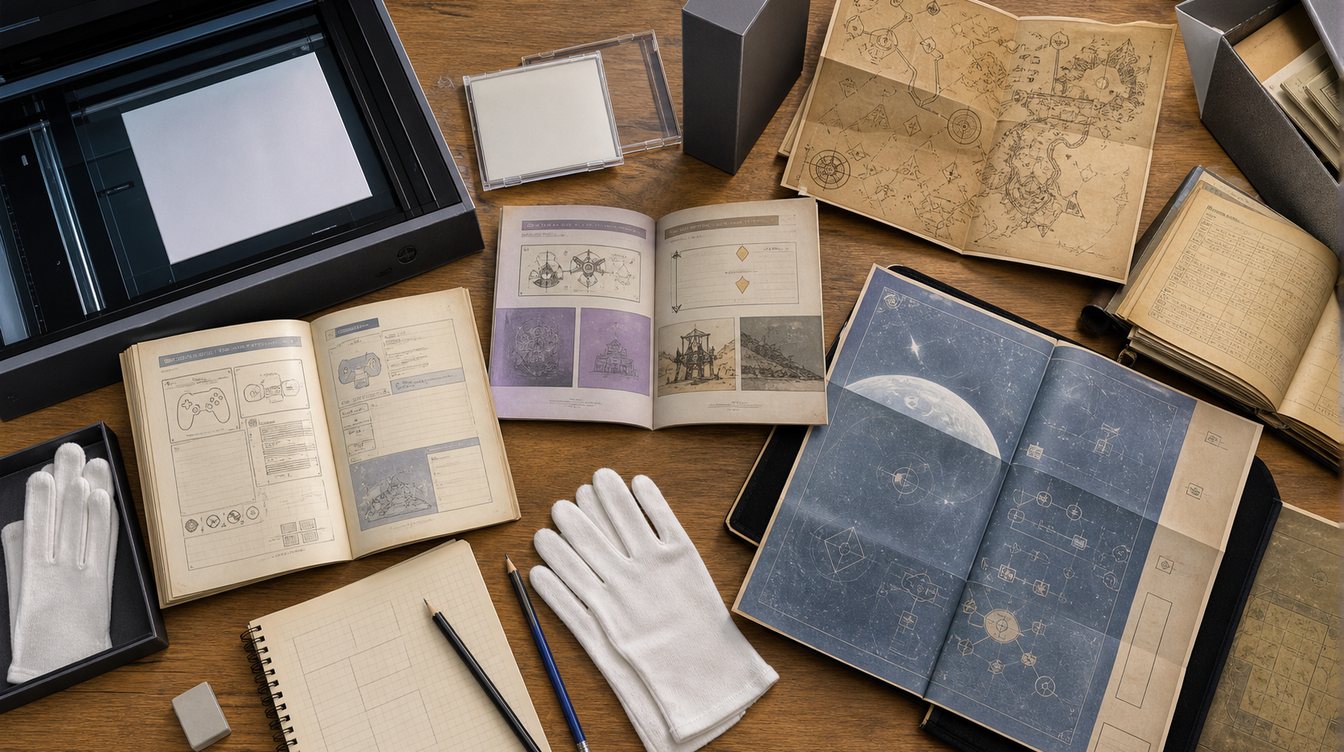
The connection between packaging and manuals runs deep, a relationship explored further in Game Manuals and Maps, where printed documentation frequently carried plot context, control references and copy-protection codes that the software itself never displayed on screen.
Why This Belongs in a Modern Archive
A reference archive that only screenshots the software misses an entire layer of how a game was originally presented, sold and understood. See Why Game Metadata Matters for how packaging details fit into a fuller preservation record alongside platform, genre and legal status fields.