Most games released before 1986 moved players forward in a fixed sequence: level one, then level two, then level three. That year, two Nintendo releases challenged that assumption at almost the same time, and the ripple effect from both is still visible in game design today.
A Overworld You Could Wander
The Legend of Zelda gave players a map with no forced order of operations. Dungeons could be attempted in different sequences, secrets rewarded exploration rather than memorization, and the game trusted players to get lost occasionally. That trust was unusual for its time, and it planted the template for the modern open-world and action-adventure genre.
A Map You Had to Learn by Backtracking
Metroid took a related idea and pointed it inward: a single connected map, gated by ability upgrades, that rewarded returning to old areas once a new tool made them accessible. This structure would later get its own name, "Metroidvania," precisely because so few other games attempted it convincingly for years afterward.
Why Non-Linearity Was a Risk in 1986
Giving players freedom also meant giving up control over pacing, difficulty curves and narrative delivery — all things linear design handles more predictably. Both games solved this with environmental storytelling and careful item gating rather than scripted sequences, a design lesson that would resurface constantly across the following two decades of PC and console RPGs and action games.
Looking at 1986 Through an Archive's Lens
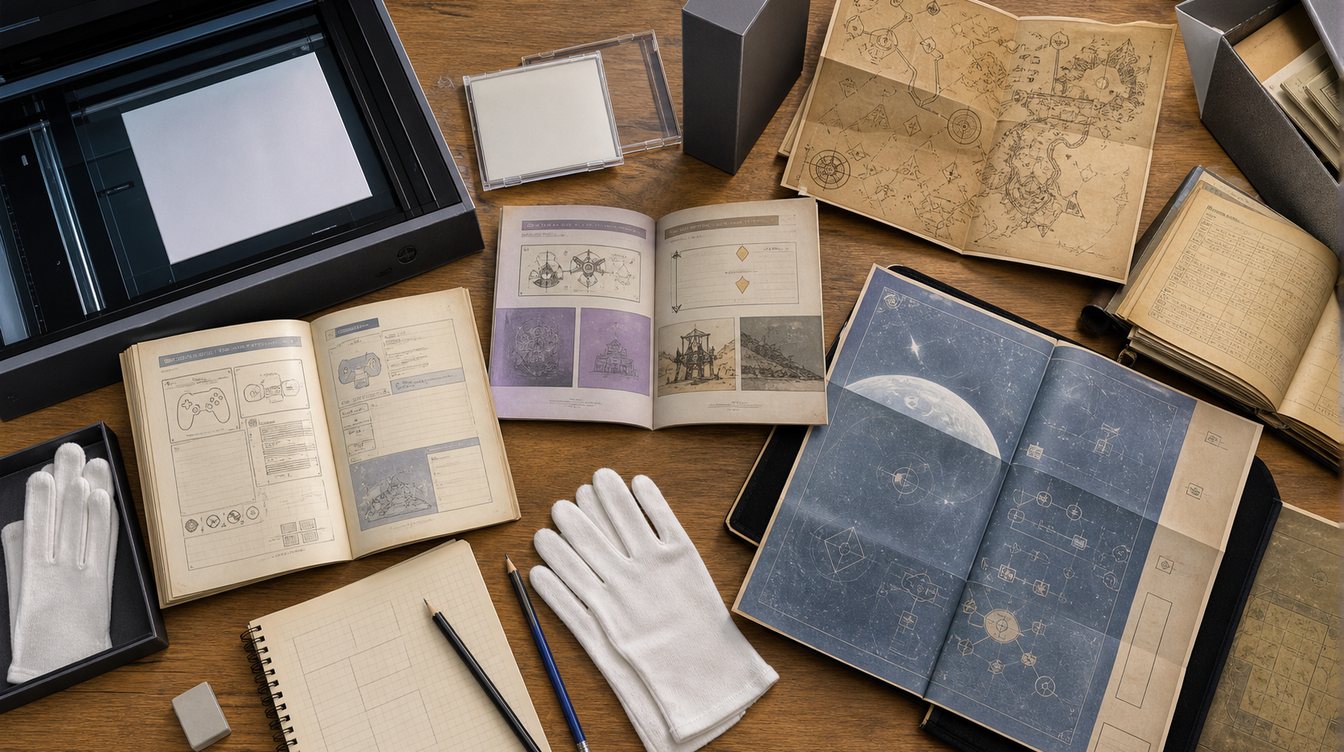
An archive entry for either game is not just "released 1986, action-adventure." It is a marker for the moment linear design stopped being the default assumption. See how the rest of the year's 1986 releases compare, and read more about how 90s platform games built directly on lessons learned here.